 1:12:31A 100-Year-Old Solution to AI Work Slop
YouTubeCal Newport
Current feed – 8 topics from 31 creatorsPersonalize your feed
1:12:31A 100-Year-Old Solution to AI Work Slop 2:04:12Russian Honeypot: I Was Trained To Control A Man's Mind With Sex! | John Kiriakou & Aliia Roza
 2:18:17416 ‒ The science of mitochondria: their role in health, aging, disease, and much more
A group of physicists has figured out why our universe exists and has not fallen apart long ago t.co/pOhZHxCCHS
Or if it's easier to understand this using the old paradigm, users are the ultimate gatekeepers. Get them and investors will follow. And if not, not. You can fool investors temporarily, but it's not worth doing; if users don't like the product, you're doomed.
The most consistent mistake I see young would-be founders make is to care too much about investors' opinions and not enough about users' opinions. They've been trained their wholes lives to seek out and please the gatekeepers. But this is where gatekeepers stop mattering.
 1:27:16Meta’s Muse: How we launched the most successful consumer product this year | Mona Sarantakos
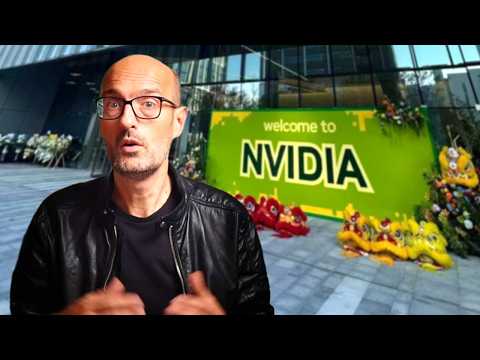 37:49The Risk Factors Nvidia Forgot to Mention
Aside Browser is a huge unlock for every AI agent t.co/lo8Tgqnu9J
On December 9th of the year the EU Product Liability Directive (PLD) will go into effect. For the first time software will have same product liability as physical products. With the recent plane stoppage caused by software & the reckless hacking by leading LLM companies, the US should do the same thing. The creators of the software need to recognize the financial impact that is possible. Which is huge.
 1:00:06The Rise Of AI Coworkers
This is not insane at all. 1/ all D&O programs will have a cap. At NVIDIA's size and with their cash position, its easier to self-insure. 2/ The IRR required by the insurance company would be above their cost of capital, so they would be giving away money. 3/ Large D&O programs attract litigants. You may not know this, but you have to disclose your D&O coverage early in a shareholder lawsuit - which is ridiculous. It would actually make sense to self-insure.
 Sabine HossenfelderX
A group of physicists has figured out why our universe exists and has not fallen apart long ago t.co/pOhZHxCCHS
 Paul GrahamX
Or if it's easier to understand this using the old paradigm, users are the ultimate gatekeepers. Get them and investors will follow. And if not, not. You can fool investors temporarily, but it's not worth doing; if users don't like the product, you're doomed.
Paul GrahamXThe most consistent mistake I see young would-be founders make is to care too much about investors' opinions and not enough about users' opinions. They've been trained their wholes lives to seek out and please the gatekeepers. But this is where gatekeepers stop mattering.
 Garry TanX
Aside Browser is a huge unlock for every AI agent t.co/lo8Tgqnu9J
 Bill GurleyX
On December 9th of the year the EU Product Liability Directive (PLD) will go into effect. For the first time software will have same product liability as physical products. With the recent plane stoppage caused by software & the reckless hacking by leading LLM companies, the US should do the same thing. The creators of the software need to recognize the financial impact that is possible. Which is huge.
Bill GurleyXThis is not insane at all. 1/ all D&O programs will have a cap. At NVIDIA's size and with their cash position, its easier to self-insure. 2/ The IRR required by the insurance company would be above their cost of capital, so they would be giving away money. 3/ Large D&O programs attract litigants. You may not know this, but you have to disclose your D&O coverage early in a shareholder lawsuit - which is ridiculous. It would actually make sense to self-insure.
Garry TanXKeep Opus 5.5 as your coding default in Claude Code. On 52 coding tasks in Claude Code 2.1.322, Fable 5.2 solved about as many (82.7% vs 84.6%) but cost 2.80x as much per solved task. Opus already solves most of these tasks, though, so telling the two apart will take harder ones. t.co/SfIvr9pHNg
Garry TanXHere's my open source harness eval repo and what it found t.co/v0sQymE8qM t.co/XWp5KliSlN
Sabine HossenfelderXHow Elon Musk has caused a rocket launch crisis t.co/go1k4NA7t4
Sabine HossenfelderXIn the past year, we have seen quite a number of papers that claim paranormal experiences are real and quantum physics explains them. t.co/h3J5MoGCwM
Sabine HossenfelderXA billionaire is offering a 1 million "courage prize" for scientific integrity. Who might win it? t.co/rHFJUmqjob
 Ali AbdaalX
what's the best agent-friendly photo library? i have a zillion pics of myself that i want to use in thumbnails and would love an ai-searchable archive that me and the team can use
Bill GurleyXI like this term - “handoverism.” Regulators and the press should hold everyone in AI to to declare if they are pro “handoverism” or anti. There really isn’t a middle ground. t.co/oEaiBAsQK7
 Andrew D. Huberman, Ph.D.X
All addictions are about addiction to control. Think about that one… it’s adaptive to strive to control and limit uncertainty. Addiction is when those circuits do so through unhealthy behaviors. Understanding this points to the solution. Dr Anna Lembke MD on Huberman Lab. t.co/FbhGQQxlVT
Sabine HossenfelderXYou might kill AI progress by something you are doing, or rather not doing. Nameley, to pay for it. t.co/7FPsvlDdtg
Bill GurleyXThis is another "must read" AI article in @nytimes. Jaron Lanier speaks with experience about Silicon Valley's ability to think fantastically about what their technology can do - to the point of radicalism. He unpacks Anthropic's unusual & error-prone approach to safety, which is a direct result of their religious belief that AI models will one-day run the world and "manage the humans." It's this belief that causes them to approach safety through "alignment," vs control & constraint. Regulators should understand that "building a technology that eventually controls us" is their ultimate goal or assumption. As such, this one company should be as far away from the regulation process as possible. (unfortunately they are actively in the mix). The mid-terms were won on the message of being anti-big tech & anti-billionaire. This will be an interesting test. Anthropic has built the most-potent "billionaire machine" ever created. If they get to write the regulation, they will try to kill open-models, and create 10x more billionaires than they already have. I will leave you with this from Jaron; "Someone’s metaphysical beliefs should be protected and are none of my business. It is also reasonable for nonbelievers to refuse the imposition of a religion from others." t.co/ASkInCjQCs
Sabine HossenfelderXScientists have come up with a new way to look for alien life by proposing a measure of complexity t.co/Z9PAVbms0m
 Andrej KarpathyX
Earlier this week Tristan published his top YouTube channels: t.co/NZ3UCNo6cT Which looked excellent so clearly I had to turn it into TristanTube: t.co/l0KyW1WdNH 47K super nerdy videos +TV mode for laid back watching. (One-shotted with Claude Code in 3 minutes) t.co/FZU0ltwVxL
Sabine HossenfelderXA decade old anomaly in particle physics refuses to go away and gets stronger instead. t.co/2PpEiqqsa0
 NavalX
The ideal passive portfolio is a broad collection of highly asymmetric long-term bets.
NavalXActual progress comes from hard-to-build technology. Which comes from competitive, creative, free-market capitalism. Which comes from one small, precarious area and then diffuses to the rest of the world. Snuff that out, and it’s global stagnation for an extremely long time.
 Andrew NgX
Join me and 2000 other AI engineers and builders at AI Dev in New York City, Nov 30-Dec 1! A LinkedIn study found that over July-September, the job title AI Engineer has been one of the 10 fastest-growing occupations in seven major economies. AI engineering has become a core skill for all software work, and AI Dev is designed to help you develop it. Our sessions give you hands-on practice with: - Coding agents and harness design: Harness tuning, repository context, autonomous coding - Agent memory and knowledge graphs: GraphRAG, vector search, persistent memory, hybrid retrieval - Agents in production: Evals, observability, simulated testing, browser and voice agents @ylecun and I will also talk about what’s next in world models and physical AI. I hope to see you there! Tickets: t.co/i4bQevDG4i
Andrej KarpathyXWeekend hack: HackerTube. I was annoyed with YouTube's recommendations so I had Claude filter down 43M comments over 20 years of HN to 6,454 videos that keep being recommended. *Significantly* better viewing experience, ~2 hours with Opus 5.5: t.co/JIhXN7OSh1 - Excellent recs without any logins (state is kept in local browser session) - Thumbnail is a representative frame from middle of the video instead of the super duper A/B test hyper-optimized user uploads - Underlying data from the comment analysis as one zip file, point your Claude at it and ask for your own version - HackerTube Longs ✊ A bit more on the process: I use Claude Code (desktop app for Mac), Opus 5.5 on Medium effort as my default. I only talk to Claude and have it do everything, the only "manual work" I helped with in tandem was in the browser (reminiscent of MenuGen): 1) I had to create some kind of API key from Google Cloud UI to query YouTube for video metadata, 2) I booted up a VPS box for serving and 3) I bought the domain name. Once the box was up I gave Claude the IP and told it update, secure, harden, deploy and optimize the code, and it did the whole thing. Many awesome projects that would have normally taken weeks/months even can now be few-shotted for breakfast. What else are we not thinking of.
 Morgan HouselX
The Psychology of Money Podcast The Hardest Financial Skill t.co/3ZGA4OZfod
Morgan HouselXThe Psychology of Money Podcast Three types of intelligence, the housing market, and winning the lottery. t.co/iWWXo22h0f
Morgan HouselXThe Psychology of Money Podcast Mark Twain on relative wealth, the obsession with minimalism, worrying in your 20s, and the barbell approach to investing. t.co/nVhU7Udm0H
Andrej KarpathyXDusting off this tweet from April because this gap in shared understanding of LLM capability is *widening*. It's now less "two groups of people speaking past each other" and more a sharp funnel. - Napkin math somewhere around 6B people (~75% of the population) have barely come in contact with LLMs at all. - Around 1-2B (~20%) are casual and infrequent users of free-tier ChatGPT-like products. This group sees derpy chatbots and treats them a bit like a better Google search, a writing aid, or etc. Maybe an agent tries to book you a flight. I have non-tech friends who (reasonably, imo) say they have not much use for it at all. Even many professionals outside of math&code are in this tier. For example, execs and many other functions spend a lot of their time talking to other people, so while they understand what is happening intellectually, it is still second-hand and a bit abstract. - Now we get to professional use of frontier-grade LLMs in math&code. Somewhere around 20M people (0.2%) see first-hand that large, complex projects that used to take them weeks/months can now be completed by agents with a prompt. Building apps, copying apps, translating apps, decompiling apps from binaries... This has all happened very quickly and recently - less than 1 year ago, I was writing code manually by hand, typing memorized computer code commands into a code editor character by character, occasionally pressing Tab to autocomplete a little chunk of code. - And finally we get to the ~5,000 people (~0.00006%) with access to frontier-grade systems internally. The external world has seen the preview. It looks like swarms of thousands of agents collaborating over weeks on software mega projects: minting zero days, running cyber attacks and defenses at machine speeds, discovering new science, advancing the frontier of mathematics. Things that would have taken top professionals in the industry years of work. Meanwhile, human review and comprehension are starting to fall behind. For example, people are still involved in the "archeology" of the OpenAI-HF incident from many months ago. Mathematicians may be poring over the 722 manuscripts on frontier mathematics for a while. The funnel is driven by a combination of factors: 1. The impact scales with ambition, problem size, and horizon. A question with a paragraph answer barely stresses the system. You need a reservoir of big, difficult problems that you really care about. This aspect drives the consumer / professional dimension of the funnel. 2. The jaggedness of the system (which I have written about a lot separately). Capability peaks in domains that are digital, verifiable and economically valuable. This is because LLM capability emerges from reinforcement learning on verifiable rewards on a curated environment mixture driven by revenue potential. This aspect primarily drives the area (e.g. math&code) dimension of the funnel. 3. Access. Free-tier, paid-tier, internal. So this is the weirdness of the moment. The general public has mostly not interacted with these systems. When they have, it looks like a derpy chatbot. The majority of professionals still see only a modest uplift. And a small sliver of professionals are experiencing the vertigo of the curve going vertical. And it is all happening at the same time.
 Brian CoxX
Me explaining local gauge invariance, which is probably one of the more ambitious bits of the Arena shows to be honest :-) t.co/vVCWZaOzOy
Andrej KarpathyXCool eval. Simply ask an LLM “Land or Water?” and give it a latitude and longitude coordinate as text. Ask 16,200 times, plot as image. The models know. From compressing the internet. t.co/jTTAhBsMfu
Andrej KarpathyXWe'll be spending a lot more time trying to understand the outputs of language models. A few thoughts, tips & tricks: Writing. Something I've had success with: Ask your LLM to explain something in ASD-STE100, it's a controlled language specification originally developed for aerospace maintenance documentation. LLMs well-versed in this language and it comes with heavy constraints on clean writing style that I often find a lot more readable. Sometimes I've tried to soften it a bit e.g. ask for "80% of the way to ASD-STE100" because the spec is quite stringent. But even better: Diagrams / images. Instead of writing, ask your LLM to create a diagram. These can be a lot easier to process, parse, and understand. But even better: Web pages. Ask for output "in HTML" to get a beautiful, interactive webpage. LLMs are getting really good at frontend and can create beautiful experiences, animations, etc. But even better: Explainer videos. The output format I am most bullish on is fully custom / bespoke explainer videos generated on any arbitrary topic. Experiment with things like "Create a 3b1b style video explainer on X. Use my ElevenLabs API key for audio narration". (you'd need an API key for the latter or you can ask your LLM to find you decent free alternatives that use your local compute). This is actually starting to work! In summary: - As LLMs get better, they will do more and more of the legwork autonomously, and a lot more of our work will rise up the abstractions into oversight and understanding. - Luckily, LLMs can help here too because as intelligence and code are increasingly abundant, you can ask for large, custom, discardable software artifacts (e.g. web apps, video explainers) that would have never made sense to create before. Push the boundaries here and you'll be surprised.